How Laser Technology Is Changing Small Business Manufacturing in 2026
For many people, laser technology still brings to mind large manufacturing facilities, automotive plants, or industrial production lines.
That perception isn't entirely wrong—but it's no longer the full picture.
Today, laser systems are just as likely to be found in a local sign-making business, a jewellery workshop, a secondary school makerspace, or a small engineering firm as they are in a major factory.
As machines have become more affordable, software has become easier to use, and applications have expanded, laser technology has become an increasingly accessible tool for businesses and educators across the UK.
Here's what modern laser technology looks like in practice—and why so many organisations are adopting it.

Sign Making: One of the UK's Fastest-Growing Laser Applications
Signage remains one of the most profitable uses of laser technology for small businesses.
Before laser cutters became widely available, producing custom signs often required routers, hand tools, or labour-intensive finishing processes. Intricate lettering, detailed logos, and custom shapes could take hours to produce.
A modern CO₂ laser dramatically simplifies that workflow.
With the right settings, a laser cutter can produce:
- Retail signage
- Office branding
- Property signage
- Wedding and event displays
- Architectural lettering
- Directional signs
quickly and consistently.
Acrylic edges often emerge clean and polished directly from the machine, reducing finishing time and improving overall efficiency.
For many UK sign makers, this means:
- Lower labour costs
- Faster turnaround times
- Increased production capacity
- Higher margins on custom work
One machine can process acrylic, wood, MDF, card, leather, and many other materials without requiring significant workflow changes.

Why Software Has Become Just as Important as Hardware
While laser hardware has improved significantly over the past decade, software has played an equally important role.
Many small businesses now rely on LightBurn, one of the most popular laser control platforms available.
Rather than juggling multiple programs, users can:
- Import artwork
- Edit designs
- Assign cutting and engraving settings
- Preview jobs
- Send files directly to the machine
all from a single interface.
For businesses handling customer orders every day, this can save a significant amount of time.
Whether you're producing personalised gifts, custom signage, or promotional products, streamlined software makes laser technology far more approachable than it was just a few years ago.
Safety Remains a Critical Part of Every Workshop
As laser systems become more common in small businesses and educational environments, safety remains a key consideration.
Both CO₂ and fibre lasers are powerful tools and should always be operated responsibly.
A safe laser workspace typically includes:
- Proper machine enclosures
- Effective extraction or filtration systems
- Clear operating procedures
- Staff training
- Appropriate safety measures for maintenance activities
Material selection is equally important.
Certain materials can produce hazardous fumes when processed and should never be used in a laser machine. For example, PVC releases corrosive chlorine gas and should always be avoided.
Whether operating from a commercial workshop, school makerspace, or home-based studio, good ventilation and safe working practices are essential.
How Laser Technology Supports UK Manufacturing
While small businesses are increasingly adopting laser systems, larger industries continue to drive innovation.
One area seeing significant growth is electric vehicle (EV) manufacturing.
Across the automotive sector, laser technology is used for:
- Battery welding
- Component marking
- Product traceability
- Precision cutting
- Quality control
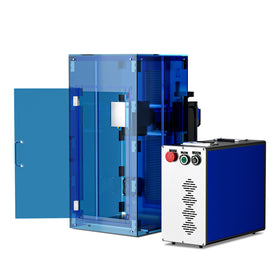
Fibre lasers, in particular, play a major role in producing battery packs and electrical components where accuracy and consistency are critical.
Although a local workshop may not be manufacturing EV batteries, the same advances in fibre laser technology eventually benefit smaller businesses through improved machine performance, reliability, and efficiency.
Laser Technology in UK Schools and Colleges
Another area where laser technology is growing rapidly is education.
Across the UK, schools, colleges, and universities are incorporating laser cutters and engravers into:
- Design & Technology (D&T)
- Engineering programmes
- STEM education
- Product design courses
- Makerspaces
- Entrepreneurship projects
Laser systems help students bridge the gap between digital design and physical production.
A student can design a project on-screen, prepare the file, run the machine, and hold the finished product within the same lesson.
This hands-on experience helps develop skills in:
- Design thinking
- Problem-solving
- CAD software
- Manufacturing workflows
- Material science
- Project planning
For many educators, laser technology has become an important tool for preparing students for modern manufacturing and engineering careers.
What This Means for Small Businesses
The common thread across all these industries is accessibility.
A decade ago, laser technology was often considered out of reach for smaller organisations.
Today, that has changed.
A local sign company can produce professional-grade acrylic signage.
A personalised gift business can engrave hundreds of products each week.
A fabrication workshop can add traceability markings to metal components.
A school can provide students with real-world manufacturing experience.
All using laser systems that fit within realistic budgets and workshop spaces.
Why More Businesses Are Choosing OMTech
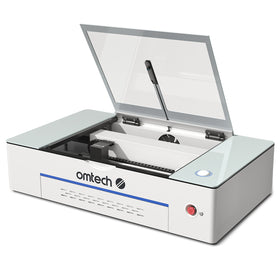
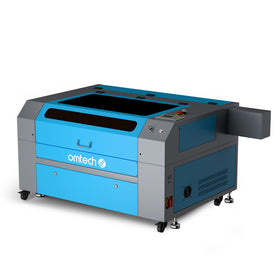
OMTech laser systems are designed to make professional laser technology accessible to a wider range of users.
From compact desktop units to larger production-ready machines, OMTech solutions support applications including:
- Sign making
- Personalised products
- Jewellery engraving
- Educational projects
- Product prototyping
- Industrial marking
- Small-scale manufacturing
With compatibility across materials such as wood, acrylic, leather, rubber, glass, anodised aluminium, and coated metals, businesses can diversify their product offerings without investing in multiple production platforms.
Laser technology is no longer reserved for large industrial manufacturers.
Across the UK, businesses, schools, and makerspaces are using laser systems to create products, improve efficiency, and develop practical skills.
Whether it's producing custom signage, personalising gifts, teaching design and engineering, or supporting manufacturing workflows, modern laser technology offers opportunities that simply weren't available to smaller organisations a few years ago.
The technology may have industrial roots, but today it's helping businesses of all sizes turn ideas into finished products—quickly, accurately, and profitably.