





Sort by:
-53%

Deal
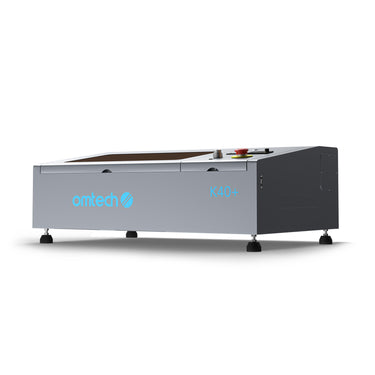 40W Desktop Laser Cutter with a 300x200mm Engraving Area | K40 Plus
£559.99
£1,199.99
Save£640.00
-48%
Sold out
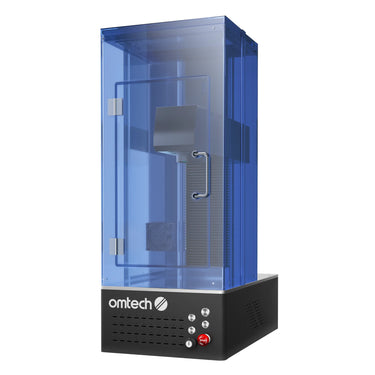 20W Galvo Fibre Laser Marking Machine with Autofocus | F20C
£1,699.99
£3,239.99
Save£1,540.00
-56%
Sold out
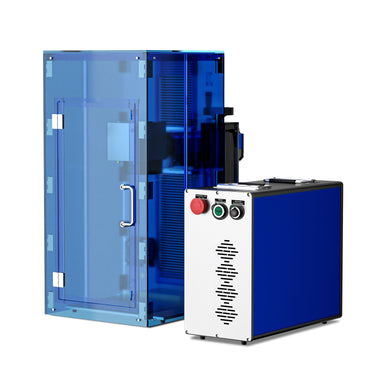 50W Fibre Laser Cutting Machine for Metal Engraving & Metal Marking | F-50
£2,399.99
£5,399.99
Save£3,000.00
-47%
Deal
20W MOPA Fibre Laser Marking Machine with Autofocus | M20C
£2,499.98
£4,679.99
Save£2,180.01
-26%
Sold out
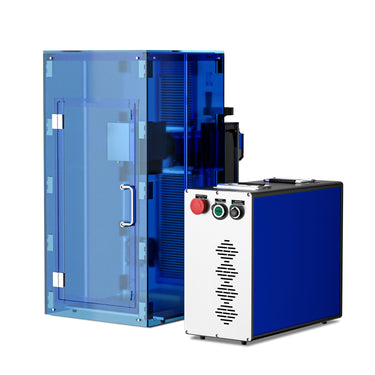 30W Fibre Laser Cutting Machine for Metal Engraving & Metal Marking | F-30
£2,499.98
£3,359.99
Save£860.01
-53%
Sold out
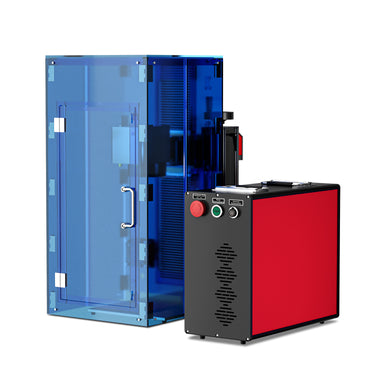 30W MOPA JPT Laser Cutting Machine for Colored Metal Engraving & Metal Cutting | M-30
£2,799.98
£5,999.99
Save£3,200.01
-26%
Sold out
Save£1,080.00
30W Galvo Fibre Laser Marking Machine with Autofocus | F30C
£3,119.99
£4,199.99
Save£1,080.00
Deal
 OMTech Solis Duo 30W Fiber & 20W Diode Dual Laser Engraver with Autofocus
£3,399.98
£3,499.99
Save£100.01
-21%
Sold out
Save£1,080.00
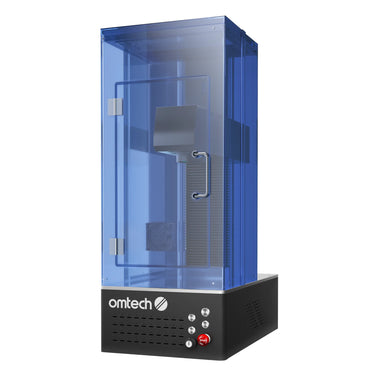
50W Galvo Fibre Laser Marking Machine with Autofocus | F50C
£3,959.99
£5,039.99
Save£1,080.00
-25%
Sold out
Save£1,440.00
30W MOPA Fibre Laser Marking Machine with Autofocus | M30C
£4,319.99
£5,759.99
Save£1,440.00
-48%
Sold out
80W MOPA JPT Laser Cutting Machine for Colored Metal Engraving & Metal Cutting | M-80
£4,499.99
£8,639.99
Save£4,140.00
-17%
Sold out
60W MOPA JPT Laser Cutting Machine for Colored Metal Engraving & Metal Cutting | M-60
£4,999.99
£5,999.99
Save£1,000.00
-5%
Deal
 OMTech Solis Duo 50W Fiber & 40W Diode Dual Laser Engraver with Autofocus
£5,399.99
£5,699.99
Save£300.00
-17%
Sold out
Save£1,200.00
60W MOPA Fibre Laser Marking Machine with Autofocus | M60C
£5,999.99
£7,199.99
Save£1,200.00
Back
No product selected
Price
Price
[[checkedProductInfoList1[item]?checkedProductInfoList1[item].price:'']]
Laser Type
Laser Type
[[checkedProductInfoList1[item]?checkedProductInfoList1[item].meta.lasertyp:'']]
Laser Power
Laser Power
[[checkedProductInfoList1[item]?checkedProductInfoList1[item].meta.laserleistung:'']]
Processing Area
Processing Area
[[checkedProductInfoList1[item]?checkedProductInfoList1[item].meta.bearbeitungsfl_che:'']]
Loading Area
Loading Area
[[checkedProductInfoList1[item]?checkedProductInfoList1[item].meta.ladefl_che:'']]
Laserable Materials
Laserable Materials
[[ (checkedProductInfoList1[item] && checkedProductInfoList1[item].meta.laserbare_materialien) ?
JSON.parse(checkedProductInfoList1[item].meta.laserbare_materialien).join('; ') : '' ]]
Laser Class
Laser Class
[[checkedProductInfoList1[item]?checkedProductInfoList1[item].meta.laserklasse:'']]
Focus Mode
Focus Mode
[[checkedProductInfoList1[item]?checkedProductInfoList1[item].meta.fokusmodus:'']]
Max Engraving Speed
Max Engraving Speed
[[checkedProductInfoList1[item]?checkedProductInfoList1[item].meta.max_gravurgeschwindigkeit:'']]
LightBurn Compatibility
LightBurn Compatibility
[[checkedProductInfoList1[item]?checkedProductInfoList1[item].meta.lightburn_kompatibilit_t:'']]
Compatible OS
Compatible OS
[[ (checkedProductInfoList1[item] && checkedProductInfoList1[item].meta.kompatible_os) ?
JSON.parse(checkedProductInfoList1[item].meta.kompatible_os).join('; ') : '' ]]
Work Table
Work Table
[[ (checkedProductInfoList1[item] && checkedProductInfoList1[item].meta.arbeitstisch) ?
JSON.parse(checkedProductInfoList1[item].meta.arbeitstisch).join('; ') : '' ]]
Rotary Compatibility
Rotary Compatibility
[[checkedProductInfoList1[item]?checkedProductInfoList1[item].meta.drehachse_kompatibilit_t:'']]
Passthrough
Passthrough
[[checkedProductInfoList1[item]?checkedProductInfoList1[item].meta.durchreiche:'']]
Max. Workpiece Height
Max. Workpiece Height
[[checkedProductInfoList1[item]?checkedProductInfoList1[item].meta.max_werkst_ckh_he:'']]
Laser Tube Lifespan
Laser Tube Lifespan
[[checkedProductInfoList1[item]?checkedProductInfoList1[item].meta.lebensdauer_der_laserr_hre:'']]
Data Transmission
Data Transmission
[[ (checkedProductInfoList1[item] && checkedProductInfoList1[item].meta.daten_bertragung) ?
JSON.parse(checkedProductInfoList1[item].meta.daten_bertragung).join('; ') : '' ]]
Net Weight
Net Weight
[[checkedProductInfoList1[item]?checkedProductInfoList1[item].meta.nettogewicht:'']]
Dimensions
Dimensions
[[checkedProductInfoList1[item]?checkedProductInfoList1[item].meta.abmessungen:'']]
Power Supply
Power Supply
[[checkedProductInfoList1[item]?checkedProductInfoList1[item].meta.energieversorgung:'']]


Share on


Share on


Share on


Share on


Share on


Share on


Share on


Share on


Share on


Share on


Share on
Customer reviews
S
Sarah Johnson
Really impressed with how much capability this machine packs into such a compact setup. It fits my small workshop perfectly and still delivers clean, consistent results.
2026-04-10
M
Michael Chen
The engraving quality is sharp and reliable. I mainly use it for small custom jobs, and it has been easy to work with from day one.
2026-04-08
E
Emma Williams
I didn’t have room for a large machine, so this was a great option. It feels well suited for detailed work without taking over the whole studio.
2026-04-05
D
David Martinez
What I like most is how precise the output looks. Fine text and small patterns come out much better than I expected.
2026-04-03
L
Lisa Anderson
Setup was smoother than I thought, and the machine feels solid once it’s running. Great choice for anyone starting a small engraving business.
2026-04-01
J
James Taylor
I use it for personalised pieces and short production runs, and it has been very dependable. It’s a nice balance between professional results and manageable size.
2026-03-28
Top Laser Engravers
Top Laser Engravers

The Best Desktop Laser Engraver Machine for Beginners
What is Laser Engraving?
Laser engraving is a form of design that utilizes a small laser to create permanent marks on a material's surface. Laser engraving machines were once out of reach for the average consumer because of their size and price tag. Thanks to technological advancements, however, desktop laser engravers are now widely available to crafters, hobbyists, and small businesses.
The laser precisely engraves onto the surface of a product, melting where it touches to leave a permanent mark. Depending on the color of the material, a laser leaves a white, gray, or black mark during the engraving process. Due to this science, desktop laser engraver users are enabled to produce wonderful designs for family and friends, and potentially scale into a successful laser business.
What is the Best Desktop Laser Engraver?
With dozens of laser engraver brands on the market at varying price points, it can be overwhelming to choose one that’s right for you. The OMTech Desktop Laser Engraver is simple enough for any newcomer and robust for professionals who seek a high-quality finished product.
Although our business is only a year old, our team spent ten years in the industry before launching OMTech in 2020. Our goal was to create a stand-alone brand that sets itself apart from the competition. We strive to take the pain points we dealt with through other brands and tackle those issues head-on — ensuring you get the best product and customer experience possible.
Aside from our desktop engravers, we also offer 50-150W CO2 laser machines and Fiber Laser Markers for small businesses that need a little more power and capability. All of our machines are housed in U.S. based warehouses. Our customer service —also based in the United States — can provide help via email, over the phone, or through a Virtual Technical Support session online.
Specialized Laser Machine Features
Compact but powerful: The OMTech Desktop Model is easy to understand and powerful enough to complete a variety of projects.
Digital temperature control: The LCD screen ensures you always know your laser supply and the temperature of your cooling water.
Guidance: Each machine has a red dot pointer that aligns with engraving points to ensure an accurate setup the first time.
Stabilizer clamp: Each machine is equipped to hold irregular shapes in place while a level board with vents ensures that full-sized products also receive accurate engraving.
Ventilation: The fan on your OMTech desktop engraver has an exhaust port to improve ventilation and laser performance while simultaneously reducing noise.
Emergency stop: When needed, you can stop your engraver by pressing a single button.
Affordability
Laser engravers can cost as little as $200 and upwards of $10,000. Our 40W Desktop laser engraver model, DF0812-40BG, costs $529.99 for a convenient 8x12 inch engraving area. Also referred to as a K40 laser cutter, this machine gives you quality engravings every time at an affordable cost.
Portability
The OMTech desktop laser engraver measures 32” x 20” x 10”, making it easy to move from room to room or a completely new location. It has four removable wheels so you can roll your machine around if needed.
When you do move or store your desktop laser engraver, ensure that it remains flat and in a temperature-controlled environment for best keeping. K40 laser cutters are known for their portability, but you should be very careful when moving them, as the laser beam alignment can be thrown off in transit.
Ease of Use
With a control board on top of the machine, it’s easy to set up your project with the correct settings and proper execution.
You can also refer to the manual for best practices, including:
Use an engraving speed between 100-255 millimeters per second.
Use a cutting speed between 1–20 millimeters per second, depending on the material.
Set the focal lens diameter to 12 millimeters.
Set the focal distance to two inches.
Set the mirror diameter to 20 millimeters.
Have the resolution set up to 1500 dots per inch (DPI).
Use the standard Z-depth (workspace height) of 0.5 inches when the vented level board is installed.
Use the maximum Z-depth (workspace height) of 2.5 inches when the vented level board is removed.
Reliability
When you invest in an OMTech desktop laser engraver, you know that it will last. We include the specs for varying degrees of use so that you know what to expect.
For example, the estimated life for our 40W CO2 laser tube is 2,000 operating hours. This number depends on the power setting you use and the water-cooling performance.
For frequent use, you can expect:
Low Power: 10–40% equals between 1,500 and 2,000 hours
Moderate Power: 40–70% equals between 1,000 and 1,200 hours
High Power: 70–100% equals between 400 and 600 hours
Our machines each meet specific quality standards, including:
Compliance with FDA guidelines
CE certification
ISO9001 quality certification
Plus, we offer a two-year machine warranty on all of our OMTech models. Your 40W laser tube and power supply also have a six-month warranty.
Compatibility
Our desktop laser engravers are primarily used on products made of:
Acrylic
Cardboard and other stiff paper
Fabric
Fiberglass
Glass
Granite
Leather
Marble
River rock
Rubber
Stone or brick
Tile
Wood
If there’s a material you want to engrave but it isn’t listed here, give us a call. Our team can test the material using one of our engravers to let you know if it’s compatible and what settings we recommend for best results.
How Do I Get Started with Laser Engraving?
Once you purchase your OMTech desktop engraver, read the instructions and complete the easy setup steps.
If you need help getting your settings right or using the engraver for the first time, we can walk you through how to set it up over the phone. Your purchase includes a free 45-minute virtual consultation, so you can also talk to us online for assistance.
Get Inspired
If you're looking for inspiration for your own projects, follow our partner, Scott Couch, on Instagram to see how he is using his OMTech desktop laser engraver for unique projects. He shares videos of his machine setup, the engraving process, and his finished products.
Takeaways
If you already have a woodworking, leatherworking, or other similar business, enhance your offerings with the OMTech Desktop engraver. If you’re a hobbyist or DIYer, you can produce cleaner designs and have a faster turnaround with an engraver.
If you live in the lower 48 states, you’ll receive free shipping on your order.
Plus, each machine comes with everything you need to get started:
Laser engraver machine
Instruction manual
Water pump
Power cord
Grounding cable
Four locking caster wheels
Venting exhaust duct
USB flash drive with accompanying software
USB key
USB type-B to type-A cable
One package of double-sided tape
Stainless steel clamp
One 7-millimeter acrylic focus tool
Check out our different engraving machine options today to find the perfect fit for your craft, hobby, or small or home business.
Jun 15, 2022
Read more

The Best Laser Engraver for Beginners
Finding the Best Beginner Laser Engraver
Equal parts artistic and technical, laser engraving places incredible creative powers at your fingertips. The endless possibilities of using a thin but potent laser beam to engrave custom artwork on popular products are justifiably captivating. Laser engraving dates as far back as the computer you’re reading this on. Nowadays, lasers are fast becoming the innovative method for marking and engraving rather than traditional techniques. For laser engraving to take place, a laser beam hits the surface of a material and vaporizes the top layer of the surface while adding the intended design with a great contrast.
As simple as the process sounds, laser engraving for beginners could go all wrong without the best beginner laser cutter. In fact, the best laser engraver for beginners should be user-friendly and easy to use with a simple structure and design. As a beginner, you would find that many entry-level laser engraving machines exist in the market with varying prices and capabilities. During your search, you may also have come across the term Chinese laser, which refers to laser machines made in China. With some stigmas surrounding the name, these machines can actually be the best starter laser cutter for beginners. In this article, we’ll summarize all you need to know to choose the best beginner laser cutter and engraver.
Starting out with a K40 Desktop Laser Engraver
K40 laser engravers are generally considered the most affordable and best laser engraver for beginners who have no prior experience handling a laser machine. K40 laser engravers are consistently the best-selling laser machines for home hobbyists and small businesses. This desktop laser engraving machine is known for its ease of accessibility and versatility in addition to its portability. These three factors mentioned earlier are very important features of a laser engraving machine for beginners. Its comprehensive user manual contains all information right from the point where you assemble the parts of your machine to where you fix minor issues that might come up while running the machine. OMTech, a laser company based in Anaheim, California, offers their popular 40W desktop laser engraver that produces flawless engravings and cuts up to 1/8” thick plywood and acrylic. This is one of the best laser engravers for beginners that would be easy to use and produce great results, yet remain affordable.
What is the best laser engraver for beginners?
Although the K40 desktop model is one of the best starter laser cutters for beginners, many users have recently voiced that they would have preferred a more powerful engraving machine with a larger workspace. Specifically, many wished they would have invested in a Mid-Range laser engraver of 50W or more. For some beginners, it comes down to the FOMO on having more power and space when choosing your first laser! Many others find that the extra power and workspace would have been critical to offering professional services. The reason for these preferences cannot be far-fetched as the Mid-Range laser engraver has even more professional advantages that could speed up your job and still produce great results while making your beginner experience fun.
The Mid-Range laser engraver is known for its efficient engraving speeds and considerable cutting capabilities. For OMTech’s Mid-Range series, the power ranges from 50W to 80W, and can effectively cut through 6 mm to 9 mm (.25" to .35") thick plywood and acrylic.
Here are some of the features that makes the Mid-Range (50W+) the best laser engraver for beginners:
Larger workspace
As a beginner in the world of laser engraving, having a larger working space means more convenience while working as you have more room to take on large workpieces. The OMTech MF1220-50 has a 11.5” x 19.5” (295 x 495mm) engraving/cutting area to tackle large-scale projects with ease. There’s enough space to see what you are doing and to place laser engraving accessories like laser rotary attachments in the workbed. These capabilities are critical to offering a wide range of professional services. So, if you have professional aspirations to start a small laser engraving business, consider a mid-range machine as the best laser engraver for beginners.
Higher power
Lower-wattage laser engravers have a hard time processing thicker and more dense materials, whereas a higher-powered system can finish the task quickly and efficiently. OMTech’s Mid-Range laser engraving machine has a higher wattage laser tube with greater cutting ability and longer laser tube lifetime. With an integrated power supply that features increased response speed, performance, and cutting power - it’s beaming with possibilities! Plus, depending on which wattage you choose, you’ll be able to cut between 6 mm (1/4″) and 9 mm (⅓”) thick acrylic and softwoods.
Better Control Interface
Laser engraving for beginners can be tough to learn. That’s why it’s imperative to choose a user-friendly machine. One of the distinctive features you would find on the mid-range series is the Ruida digital controller. It is an intuitive control panel with a digital display that allows complete control of the laser head, pausing and stopping projects, adjusting laser power and speed settings. Some other features include air-assist, adjustable laser nozzle, built-in ventilation and the red dot guidance. The Ruida controller is easy to use and it’s widely trusted by laser engraving veterans and small businesses throughout the laser community. Surely, this again qualifies the mid-range as the best laser engraver for beginners and best beginner laser cutter.
Safety Tips for Beginner Laser Engravers
Laser engraving is an exciting and rewarding skill to learn, but safety should always come first—especially for beginners. Understanding a few essential safety practices will help you protect yourself, your workspace, and your equipment while achieving consistent results.
1. Ensure Proper Ventilation
Laser engraving produces smoke, fumes, and fine particles, particularly when working with wood, acrylic, leather, or coated materials. Always use an effective exhaust system or place your machine near a window with proper ducting. Good ventilation not only improves air quality but also helps keep optics and components cleaner over time.
2. Wear Appropriate Eye Protection
Even enclosed laser engravers can emit reflected laser light. Wearing laser safety glasses designed for your machine’s wavelength adds an extra layer of protection, especially during setup, testing, or when the enclosure is open.
3. Never Leave the Machine Unattended
Laser engravers generate heat and can pose a fire risk if materials ignite. Beginners should always stay nearby while the machine is running and keep a fire extinguisher within reach. A few seconds of attention can prevent costly damage or accidents.
4. Choose Safe Materials Only
Not all materials are suitable for laser engraving. Certain plastics and treated materials can release toxic fumes when burned. Before engraving a new material, confirm that it is laser-safe and avoid unknown or unverified materials altogether.
5. Keep Your Workspace Clean
A tidy work area reduces fire hazards and improves engraving consistency. Regularly remove debris from the machine bed, clean residue from previous jobs, and ensure airflow paths are not blocked.
6. Follow Basic Maintenance and Setup Guidelines
Proper alignment, clean lenses, and correct focus settings help ensure smooth operation and reduce unnecessary strain on the machine. Beginners who follow routine maintenance steps often experience fewer issues and better engraving quality from the start.
Conclusion
With all said and done about the qualities of the best laser engraver for beginners, it is clear that you can never go wrong by buying a bigger machine. This is especially true when you have future plans to go pro with the laser engraving business. As you start your journey, the right laser engraving machine would help you grow and hone your skill on your way to the top. In essence, do not purchase a laser engraver with only the present in mind, bear in mind the possibility of someday turning your passion into profit. OMTech manufactures quality laser machines with top-notch features and value for money spent. As you launch your business with OMTech, reach out to them for all you need to get started on the right track.
Frequently Asked Questions
What is the best laser engraver for beginners?
The best laser engraver for beginners is one that is easy to set up, safe to use, and versatile enough for common materials like wood, acrylic, leather, and rubber. Entry-level CO₂ laser engraving machines are often recommended because they balance performance, affordability, and user-friendly operation.
Is a laser engraver the same as a laser cutting machine?
Not exactly. A laser engraver is designed primarily for marking and engraving surfaces, while a laser cutting machine is optimised for cutting through materials. However, many modern laser engraving machines can both engrave and cut, making them ideal for beginners and small workshops.
What materials can beginners work with using a laser engraving machine?
Beginners can comfortably work with wood, MDF, acrylic, leather, paper, and rubber. CO₂ laser machines are especially popular for these materials, while fibre lasers are more suitable for engraving bare metals.
Are laser engravers suitable for small businesses?
Yes. Many beginners start with a laser engraver and quickly turn it into a profitable tool. Compact machines are often considered the best laser cutter for small business use, as they support custom products, signage, gifts, and light production without requiring industrial space.
How much maintenance does a beginner laser engraver require?
Basic maintenance includes cleaning lenses and mirrors, checking alignment, ensuring proper ventilation, and monitoring cooling systems. Beginner-friendly laser engraving machines are designed to keep maintenance simple and manageable.
Is it difficult to learn laser engraving?
Not at all. With intuitive software and plenty of tutorials available, most beginners can start engraving within a few hours. Learning curves are generally gentle, especially with modern laser engravers designed for first-time users.
Jun 16, 2022
Read more

Diode Laser vs. CO2 Laser vs. Fiber Lasers - Complete Guide
When it comes to laser engraving and cutting, choosing the right laser engraving or laser cutting tool is key to getting the best results. The most effective laser tools contain these three laser types: diode lasers, CO2 lasers, or fiber lasers, each with its own strengths and weaknesses.
At OMTech, we’ve seen each laser in practice. Our experts have put together this guide comparing these three laser engraving types, to help you understand how they work, what materials they can handle, and which one might be the best fit for your projects. Whether you’re a hobbyist or a professional, read up so you can choose between CO2, fiber, and diode lasers for your projects!
Key Takeaways: Diode vs. CO2 vs. Fiber Lasers
We’ve summarized the major differences between diode, CO2, and fiber lasers in the table below:
Feature
Diode Laser
CO2 Laser
Fiber Laser
Wavelength
800 – 980 nm
10,600 nm
1064 nm
Primary Use
Engraving on wood, plastics
Cutting/engraving non-metals
Industrial metalwork
Precision
High
Very high
Extremely high
Power & Speed
Lower, slower
Higher, faster
Very high, fastest
Material Compatibility
Limited (softer materials)
Broad (non-metals)
Metals, hard plastics, ceramics
Cost
$400 – $550
$2,000 – $10,000
Similar to CO2 laser for lower-power models
Expensive for industrial-grade
Energy Efficiency
30 – 50%
10 – 20%
Higher than CO2
Maintenance
Low
High
Low
Best For
Hobbyists, small projects
Non-metal-focused businesses
Industrial applications
For beginners, OMTech offers a 40W CO2 laser machine around £550. Know more details about the machine.
Diode vs. CO2 vs. Fiber Laser: How They Work
Choosing whether to use a diode laser vs. CO2 laser might seem like a hard task, but when you understand how each one works, it becomes easier. Here’s what you need to know about each laser technology.
How Diode Lasers Work
Diode lasers are compact and efficient devices that use semiconductor materials to create laser light. The process begins when an electric current passes through the diode, causing electrons in the semiconductor to jump from a higher energy level to a lower one.
This transition releases energy in the form of photons, which is the light we see. These photons bounce between mirrors inside the diode, amplifying the light and creating a focused laser beam. Diode lasers are known for their precision and are often used for engraving delicate or fine details on materials like wood, plastic, and metals.
How CO2 Lasers Work
CO2 lasers operate on a different principle compared to diode lasers. These lasers use a gas mixture primarily composed of carbon dioxide (CO2), nitrogen, and helium. When an electric current is applied, it excites the nitrogen molecules, which, in turn, transfer energy to the CO2 molecules.
This energy causes the CO2 molecules to emit light in the infrared spectrum. The light is then directed and focused through mirrors and lenses to produce a powerful and precise laser beam. CO2 lasers, like those available in OMTech’s collection, are widely used for cutting and engraving non-metallic materials such as wood, acrylic, leather, and glass, offering deep cuts and high-speed performance.
How Fiber Lasers Work
When a light source pumps energy into a fiber, rare-earth elements (such as erbium, ytterbium, or neodymium) doped within the fiber are excited. These elements have specific energy levels that enable them to efficiently absorb and emit light.
As the light source excites the atoms within the fiber, they reach an excited energy state. If another photon with the same energy as the excited atoms passes through the fiber, it can stimulate the excited atom to emit a photon with the same energy and phase.
The fiber is placed within an optical cavity consisting of two mirrors—one highly reflective and the other partially reflective. This cavity helps amplify the light through multiple reflections, creating a coherent laser beam. The partially reflective mirror allows a portion of the amplified light to escape the cavity, forming the laser beam output. This output beam can be directed and focused for various applications such as cutting, welding, or marking.
Advantages and Limitations of Diode, CO2, and Fiber Lasers
Now, let's explore the advantages and disadvantages of the three types of lasers.
Advantages of Diode Lasers
Diode lasers are known for their affordability ($400 to $550 on average) and compact size (around 100 grams with heatsink), making them accessible to everyone. They also consume smaller amounts of power than CO2 lasers, which makes them energy-efficient and cost-effective to operate.
They’re particularly effective for engraving on materials like wood, plastic, leather, and acrylic. Diode lasers’ precise focus also allows for detailed engravings, making them ideal for intricate designs.
They often have a longer lifespan (up to 50,000 hours), reducing the need for frequent replacements. These lasers tend to have higher electrical efficiency than CO2 lasers (30 to 50% compared to 10 to 20%).
Some specially crafted diodes can cut/engrave metals like stainless steel, aluminum, copper, and some plastics and fabrics, making them pretty versatile.
Limitations of Diode Lasers
Despite their benefits, diode lasers have limitations. They’re less powerful than CO2 lasers, so they’re not really unsuitable for cutting thicker materials or working with very reflective or transparent surfaces. The range of materials they can effectively cut is limited, often restricted to softer substances.
Also, the engraving speed of diode lasers is slower compared to CO2 lasers, which can have a negative impact on productivity in high-demand settings. Their lower power also results in shallower cuts, which might not be suitable for certain applications.
Advantages of CO2 Lasers
CO2 lasers are highly versatile, making them ideal for diverse materials, including wood, acrylic, glass, fabric, glass, stone, marble, leather, and more. One of the best features of CO2 lasers is that they can cut through thicker materials with ease, which really opens them up to many more uses than diode lasers.
They have excellent cutting speeds, up to 1200 mm/s (max speed of OMTech machines currently), and high power output, 30 to 150 W typical for home use, up to 400 W industrial. Plus, these lasers operate relatively quietly and produce smooth edges, reducing the need for extra finishing work.
Their long lifespan and reliability make them a cost-effective option for both small businesses and industrial applications.
Limitations of CO2 Lasers
One major drawback of CO2 lasers is their inability to effectively cut or engrave metals without extra equipment or treatments. CO2 lasers also tend to have lower energy efficiency compared to diode lasers, which can end up costing you more over time.
The initial cost of CO2 laser machines is often higher ($2,000 to $10,000), and they need regular maintenance, including the replacement of CO2 gas tubes. CO2 lasers are typically larger and need more space, which might be a constraint for smaller workshops or home use.
Advantages of Fiber Lasers
Fiber lasers can be used on a wide variety of metals and hard plastics. Although CO2 lasers can be used on these materials as well, they require a thermal/laser bond spray and multiple passes to achieve the desired results.
Another advantage of fiber lasers is they efficiently deliver energy to the material they are dealing with. This means lower energy costs and a more environmentally friendly production process.
Besides, fiber lasers have a longer lifespan and require less maintenance compared to other types of lasers. This means less downtime and operating costs.
Limitations of Fiber Lasers
While fiber lasers are known for their power and durability, fiber lasers, particularly industrial models, can have a higher upfront cost. Home-use fiber laser markers are affordable, but often have smaller, specialized work areas designed for intricate and powerful applications, limiting their versatility in processing larger materials.
In terms of the materials they can work with, fiber lasers are generally less versatile compared to CO2 lasers. If your projects involve a variety of materials, not just metals, you may find that a combination of CO2 and fiber lasers is necessary to meet your needs.
How to Choose Between CO2 vs. Diode vs. Fiber Lasers
Choosing between diode vs. CO2 vs. fiber lasers depends on your specific needs, including the materials you plan to work with, the level of detail you want, and your budget.
Materials: Diode machines are great for engraving on materials like wood, leather, and some plastics. However, they struggle with cutting and engraving on thicker materials. CO2 lasers, on the other hand, can cut and engrave a much broader selection of materials, including glass, acrylic, and thicker woods. Fiber lasers usually work with metals and some hard materials.
Precision: If you need high detail and precision, especially for intricate designs, CO2 and fiber lasers are generally better. Diode lasers can be precise, but they often don’t match the fine detail that CO2 lasers can achieve.
Power and Speed: CO2 lasers typically have higher power output, making them faster and more effective at cutting thicker materials. Diode lasers are usually less powerful, so they might take longer to cut or engrave materials. Fiber lasers come in all sorts of power levels, from the low power (under 100W) used for engraving to the high power (over 1,000W) for cutting. The low-power fiber lasers are usually much faster than CO2 lasers.
Cost: Diode lasers are usually more affordable, making them a good choice for beginners or hobbyists. CO2 lasers are more expensive but offer more versatility and power, which might be worth the investment for more demanding projects. Low-power fiber lasers are similarly priced to CO2 lasers, but high-power fiber lasers can be significantly more expensive.
Maintenance: CO2 lasers often need more maintenance due to their more complex design. Diode lasers are generally easier to maintain, which can be an important factor for users looking for a low-maintenance option. Fiber lasers demand lower maintenance compared with CO2 and diode laser.
Diode Laser vs. CO2 Laser and Fiber Laser: Which to Choose
Fiber lasers typically work with a 1064 nm wavelength, while CO2 operates with a higher wavelength (10,600 nm) and diode is lower (800–980 nm). When it comes to usage, fiber lasers are much better for industrial engraving and cutting of metal, hard plastic, and ceramics, and more. They’re a lot more precise and a lot faster than CO2 and diode lasers. However, due to their high performance, they’re much more expensive than CO2 and diode lasers.
Ultimately, CO2 lasers are best for businesses that have a focus on non-metals. Diode lasers are affordable options for hobbyists and beginners. Fiber lasers are the best option for metal engraving and industrial applications.
Check OMTech high-quality CO2 laser engravers/cutters and fiber laser markers.
Here are the pieces created by OMTech CO2 laser machines.
Here are the pieces created by OMTech Fiber laser markers.
Diode vs. CO2 vs. Fiber Laser | FAQs
Can I Upgrade from a Diode to a CO2 Laser, or Vice Versa?
Upgrading from a diode laser to a CO2 laser, or vice versa, isn’t easy. Each type of laser requires different hardware and power supplies, so you can’t just swap one for the other in the same machine.
If you’re thinking about switching, it’s usually more practical to purchase a new laser system designed specifically for the type of laser you want to use, CO2 or diode.
How Do Temperature and Humidity Affect Diode and CO2 Lasers
Temperature and humidity can impact the performance of both diode and CO2 lasers. High temperatures can cause overheating, leading to reduced efficiency or potential damage to the laser components. High humidity can cause condensation, which may affect the laser optics and lead to beam distortion or even equipment failure.
What’s the Difference Between a Fiber vs. CO2 Laser
The main difference between a fiber and a CO2 laser lies in their material compatibility and the type of light they emit. Fiber lasers, whether in fiber laser cutters or compact fiber laser markers, are generally faster and emit a shorter wavelength, making them more efficient for cutting and engraving metals.
CO2 lasers, on the other hand, have a longer wavelength and a wider range of materials they can work with. They tend to be better suited to non-metallic materials like wood, acrylic, and glass.
Nov 7, 2024
Read more


FAQ
OMTech’s compact range combines small-footprint CO2, Galvo fibre, and MOPA fibre machines. On the current collection page, that includes the 40W K40 Plus for non-metal cutting and engraving, as well as compact fibre and MOPA models such as the F20C, F30C, F50C, and M20C for precision metal marking. OMTech positions this range for work areas up to 350 × 450 mm and for space-saving, high-precision, small-batch production.
If you’re just getting started with wood, acrylic, leather, or other non-metal projects, the K40 Plus is the most beginner-friendly choice in this collection. It is a 40W CO2 desktop machine with a 300 × 200 mm working area, a Class 1 safety rating, and a footprint designed to fit comfortably in home studios, classrooms, and small workshops.
Yes, but you’ll want one of the fibre or MOPA models rather than the K40 Plus. OMTech describes its fibre range as suitable for metal marking and engraving, and the F20C and F50C pages specifically mention metals such as stainless steel, aluminium, brass, gold, and silver. The M20C is designed for the same metal-focused workflow, with added control for more specialised results.
A standard Galvo fibre laser is the better fit for fast, crisp, permanent marking on metals and certain hard plastics. A MOPA fibre laser gives you more control over pulse width, which helps reduce heat buildup, improve fine-detail work, create darker marks on anodised aluminium, and even produce colour marking on stainless steel. On the M20C, OMTech lists an adjustable pulse width of 2–500 ns for that added flexibility.
Yes. OMTech positions this collection for small-batch, high-precision work, and its compact fibre and MOPA systems list engraving speeds of up to 10,000 mm/s with marking accuracy of ±0.01 mm. That makes them a strong fit for repeat jobs such as logos, serial numbers, barcodes, tags, and other detailed production marking.
Yes. That is one of the main reasons this collection exists. OMTech describes the compact range as space-saving, and the product dimensions reflect that: the K40 Plus is listed at 810 × 500 × 250 mm, the F20C/F30C/F50C at 68 × 34 × 71 cm, and the M20C at 600 × 340 × 830 mm. In other words, these machines are aimed at users who need real capability without giving up an entire workshop.


