Can a Laser Cutter Cut Leather? A Guide For Buyers in the UK
The question of whether a laser cutting machine can cut leather is a little too complex to give a single, direct answer to. That is because, generally speaking, there are laser cutting machines that are capable of cutting leather, but not all laser cutters can cut leather, and not all types of leather can be laser cut.
So, yes, a laser cutting machine can cut leather, but it depends on the type of leather and also the type of laser cutter: it can cut real leather, but you must use the right type of material and have strong ventilation.
Laser Cutters Cut Natural Leather
Natural leather is suitable for laser cutting because of its natural organic, dense protein structure. Because is it sense, it absorbs the laser energy cleanly, allowing for high-precision cuts and detailed tactile engravings. As long as you are using real leather, a laser cutter slices through quickly and can create smooth, intricate shapes and fine engraved patterns that are difficult to achieve by hand.
Engraving also works on natural leather because the heat of the laser burns the top layer just enough to leave crisp, dark edges and a pleasant textured contrast on the surface.

What Are The Best and Worst Types of Leather For Laser Cutting?
There are many types of leather that are commonly used in leatherworking, but not all of them can be laser cut. In general, whether or not a type of leather can be laser cut comes down to two things: its chemical composition and its physical structure/ thickness. Here is an overview of which types of leather are best for laser cutting, and which types should be avoided:
- Vegetable-tanned leather: Vegetable-tanned leather is the safest and best choice for laser cutting. It uses natural plant tannins, which burn with minimal odor and create high-contrast dark edges
- Chrome-tanned leather: Chrome-tanned leather is not suitable for laser cutting. The high heat of the laser can release unpleasant or potentially toxic chemical irritants.
- Faux leather (Vinyl / PU): Never laser cut fake leather unless it is explicitly labeled as PVC-free. Cutting vinyl or PVC releases corrosive chlorine gas, which ruins the machine and harms your lungs.
How to Choose the Best Laser Leather Cutting Machine
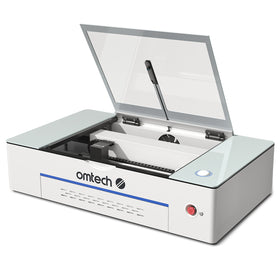
When choosing the best laser for leather cutting, you must decide based primarily on whether your objective is detailed engraving, heavy cutting, or high-speed batch production. There are two primary types of lasers for leatherwork (CO2 and Diode).
1. CO2 Laser Cutting Machines: Best For Thick Natural Leather
If you are cutting thick vegetable-tanned leather (over 2mm / 5oz) and/or executing high-speed, dark engravings, a CO2 laser cutting machine is the best option. CO2 lasers are the best all-around lasers for leather cutting, whether it is heavy-duty cutting, production work, or thick tooling leather (3mm to 8mm+).
As long as you are cutting natural leather, a CO2 laser is the best choice you can go for. Even with a decent, small, affordable desktop CO2 laser machine cut leather quicker and more cleanly than any other type of laser, and the results are usually much better than you would expect to get with a diode laser, for example.

What takes a diode laser 3 to 4 passes to cut, a CO2 laser can usually slice through in a single clean pass. The leather does not have to sit under high heat for too long, which helps reduce edge distortion, warping, and severe charring.
2. Diode Lasers (Best For Small-Scale, Hobbyist-Level Leather Cutting)
Blue diode lasers (around 455nm) are compact and highly accessible for leather cutting on a small scale, and they are highly recommended if you are a hobbyist leatherworker or on a tight budget. If you are doing light leather engraving, marking stitch-hole templates, and cutting thin garment or lining leather (under 1.5mm / 3oz), there is no need to invest in a CO2 machine, which would be much more expensive. A diode will do the job.
However, diode lasers process leather much more slowly than CO2 machines. To cut through thicker leather, a diode requires slow speeds and multiple passes, which can create extra soot, sticky residue, and flare-up risks. Air assist is absolutely mandatory here to keep the cuts clean.
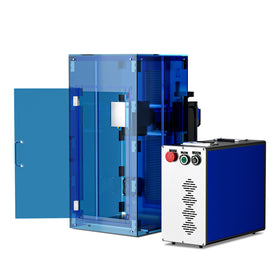
For high-volume leather production, the OMTech Pro FLUX 100W Flying Galvo CO₂ Laser (soon to be available in the UK) combines a flying-galvo system with 100W CO₂ cutting capability. This makes it particularly relevant for businesses that want very high engraving speeds while still having substantial CO₂ cutting capability for leather and other non-metal materials.
CO2 vs Diode Lasers for Leather Laser Cutting
| Feature | CO2 Lasers | Diode Lasers |
| Best Used For | High-volume production, thick tooling hides | Hobbyist projects, light engraving, thin templates |
| Cutting Power | Blasts through thick leather (4–8mm+) in a single pass | Limited to thin leather (1–3mm); requires multiple passes |
| Processing Speed | 2x to 5x faster than diode systems | Slower; complex cuts can take several minutes |
| Edge Quality | Clean cuts with minimal charring when properly tuned | Heavy charring/soot on thick cuts due to slow speeds |
| Enclosure and Safety | Always fully enclosed with built-in exhaust systems | Often open-frame; requires buying or building an exhaust hood |
Why Choose a CO2 Laser For Leather Laser Cutting? Advantages
- A mid-to-high-power CO2 laser can achieve single-pass slicing: A standard 40W to 60W CO2 machine can cut through thick tooling leather (like 7/8 oz hides) effortlessly in one pass.
- There is less charring and soot: Because a CO2 laser cuts faster, the heat has less time to transfer into the surrounding material. This leaves a cleaner edge that requires minimal sanding.
- CO2 lasers have all the essential enclosures: Leather creates an incredibly intense, foul odor when burned. CO2 machines come fully enclosed, making it significantly easier to vent the hazardous fumes out a window using inline fans.
Why Choose a Diode Laser For Laser Leather Cutting? Key Advantages
- You get fine details: High-end diodes have an incredibly fine focal point, making them exceptionally good for ultra-detailed surface engravings, scoring stitch-line templates, or marking leather before hand-tooling.
- The "Gantry Moving" advantage: Open-frame diode gantries can be picked up and physically set directly on top of massive hides stretched across a workshop floor. You aren't restricted by a fixed interior bed size.
- They are more affordable: Diodes are far cheaper upfront and require less active maintenance (no water cooling lines or mirrors to align).

Choosing a Laser Cutting Machine For Leather: CO2 vs. Diode
| Laser Type | Ideal Leather Thickness | Strength | Core Weakness |
| CO2 Gantry | Any thickness up to 4mm+ | Power, clean single-pass cuts, large workspace | Bulkier machines, more expensive |
| Diode | Thin leather (under 1.5mm) | Affordable, highly precise engraving, compact | Struggles with thick cuts; burns edges if forced |
| Galvo CO2 | Small goods/engraving only | Extreme engraving speed, ideal for business branding | Very small work area; leaves slanted edges when cutting |
Recommended CO2 Lasers For Leather Cutting
A 40W to 80W CO2 laser (like a budget K40 machine or a production Omtech) slices through dense leather quickly in a single pass. Single-pass cutting limits scorching and leaves cleaner edges.
1. OMTech 60W CO2 Laser Engraver
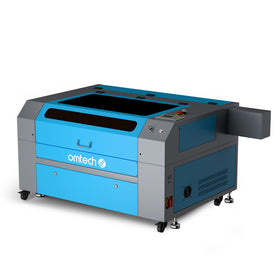
For leatherworkers looking for a production-ready 60W CO₂ machine, the OMTech Pronto 35 60W CO₂ Laser Cutter and Engraver is a strong fit. It has a 20" × 28" working area, autofocus, and a maximum engraving speed of 1,000 mm/s, giving you plenty of workspace for leather sheets, patches, bags, and other projects. OMTech also offers configurations with LightBurn, a water chiller, and a rotary attachment.
If you want the cutting capability of a 60W CO₂ laser while keeping the setup more straightforward, the OMTech Turbo-646 60W offers a 20" × 28" work area, autofocus, and a 600 mm/s maximum engraving speed. OMTech specifically lists leather among the materials it can engrave and cut.

What Are The Pros and Cons of Laser Leather Cutting?
- The smell: Cutting natural leather smells strongly like burning hair or flesh. Excellent outdoor exhaust ventilation or a heavy-duty carbon/HEPA filter is required.
- There is a high risk of charred edges: The laser burns the edges. This leaves a black soot residue that can stain your hands, thread, or project pieces. You may need to clean, sand, or finish the edges by hand.
- There are limits to how thick you can cut: Thin leather (under 1mm to 1.5mm) cuts cleanly and quickly. Thicker leather (over 2mm to 3mm) requires multiple high-power passes and creates more char. Traditional blades or clicker dies work better for thick leather.
3 Methods to Effectively Clean Laser-Cut Leather
Laser cutting leather can be a bit of a messy process that leaves you with two main issues: cleaning the surface soot (char), and dealing with the burnt smell. Properly cleaning laser-cut leather means removing soot, char, and that distinct burnt smell. There are two ways to deal with the soot, and one way to deal with the burnt smell.
1. The Soap and Water Method (Best for Deep Char)
Standard dish soap or saddle soap is the most effective way to cut through grease and soot after laser cutting leather. Because leather spots easily when only one area gets wet, the most critical rule when using any liquid method is to dampen the entire surface evenly and let it dry uniformly. Here’s how to use this method:
- Dunk the entire piece of leather into warm water mixed with a small amount of Dawn dish soap.
- Lightly scrub the edges and surface with a damp sponge, soft toothbrush, or horsehair brush.
- Then, rinse thoroughly, blot it completely flat between paper towels to remove excess moisture, and let it air dry completely.
2. The Dry Cleaning Methods (Best for Delicate or Light Soot)
If you want to avoid getting the leather completely wet, you can use physical abrasion to lift the soot. Here is a step-by-step process for using this method:
- Kneaded eraser / magic eraser: A slightly damp Mr. Clean Magic Eraser works wonders for wiping down bulk soot on engravings. Alternatively, a kneaded artist's eraser is soft enough to grab loose soot without scratching or lifting the finish of the leather.
- Lint roller and air: First, gently blow away loose debris, then run a sticky lint roller over the surface to pull the microscopic char out of the crevices.
- Sand the edging: For the dark, burnt edges of the cut itself, simply use a fine-grit sandpaper to sand the char away before burnishing.
3. Eliminating the Burnt Smell
Laser-cut leather smells notoriously bad because you are dealing with burnt organic material. If a soap-and-water wash doesn't fully eliminate it, try these steps:
- Wipe down the charred areas with a cloth dampened with a little isopropyl alcohol (rubbing alcohol).
- If the smell persists, place the dry piece in a sealed container or bag covered in baking soda for 24 to 48 hours to absorb the remaining odors.

Long-Term Strategy for Cleaning Laser-Cut Leather
- The "Dunk" Trick: Fully submerge your veg-tanned leather in water and blot it right before putting it in the laser. Cutting the leather while it is thoroughly damp dramatically reduces charring, keeps the piece flat on the crumb tray, and lets the remaining soot wash right off afterward.
- Masking Tape: Mask the top (and bottom) of your leather tightly with blue painter's tape or paper transfer tape before running the job. This catches all the surface smoke and flare-ups; you just peel it off to reveal a clean surface.
- Laser Safety: Never, under any circumstances, cut chrome-tanned leather. The chemical process releases highly toxic, dangerous gases (like hexavalent chromium) that can ruin your lungs and corrode your laser machine. Stick strictly to vegetable-tanned leather.
Final Thoughts on Laser Cutting Leather
Yes, a laser cutter can cut leather, but the type of leather and the type of laser you choose make a major difference. Vegetable-tanned leather is generally the material to focus on for laser cutting, while materials containing PVC or other unsuitable compounds should never be put into a laser.
For most leatherworking applications, CO₂ lasers offer the most practical combination of cutting power, engraving capability, and working area. A 60W machine such as the OMTech Pronto 35 can provide a substantial workspace for leather goods, while a more compact or entry-level CO₂ machine may be enough for smaller projects.
You may also be interested in this complete guide on how to laser engrave leather patches and treat leather.