How Much Is a Laser Cutter for Wood?
An effective approach to choosing a laser cutter for wood is usually to start by defining your budget and finding the best model that fits within that price range.
The cost of a mid-to-professional-level laser cutting machine for wood generally ranges from £600 to £6,000+. The exact price range will depend on whether you choose an open-frame diode laser or a more powerful, enclosed CO2 laser, as well as the thickness of the wood you plan to cut. However, there are different types of laser cutters for wood, from small-scale entry-level open desktop cutters to professional production units.

Laser Engravers For Wood: Hobbyists vs Desktop vs Small Business Price Tiers
1. Entry-Level Hobbyist Diode Lasers (£200 – £500)
The most affordable laser cutters for wood are often pen-frame diode lasers ranging from 5W to 20W. While they are very affordable, (£200 – £1000), there is a limit on the size and thickness of the woods laser engravers in this category can cut. Decent 20W units can cut up to 1/4" wood in clean passes, but anything thicker requires multiple slow passes that leave heavily charred edges.
- Laser cutting machines at these prices are usually best for highly detailed engraving and cutting thin woods (e.g., 3mm / 1/8" Baltic Birch plywood).
- Best for engraving and light cutting of thin 3mm (1/8") plywood or basswood.
Some popular models shared online are the Ortur Laser Master series and the Creality Falcon series (200–500).
However, because they are open-frame, these laser cutters come with an extra cost: you must budget about 50–100 extra for safety features like enclosures, eye protection, and a honeycomb bed.
2. Standard Desktop and Entry CO2 Laser Cutters (£600 – £2,500)
Between entry-level and professional, commercial-grade laser cutting machines is another interesting category of laser cutters for wood: standard desktop CO2 laser cutters. These CO2 lasers (usually 40W to 60W) are usually fully enclosed and can cut organic materials like hardwoods and plywood significantly faster and cleaner, handling 1/4" to 1/2" wood thickness with ease.
The "K40" style CO2 laser cutters start around £600 to £700. They have a small bed (~9"x12") but are considered the cheapest entry into true CO2 cutting.
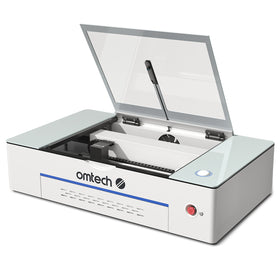
The OMTech Polar series contains two excellent machines in this category, offering the advanced features for business-scale production, but also the portability and compactness of a hobby-sized laser cutter. Consider these models if you are looking to get into wood laser cutting for business, but are limited by your budget, space available, or uncertain about the success of the business and unwilling to invest in a bigger machine.
3. Prosumer and Small Business CO2 Laser Cutters For Wood ( £2,500 – £6,000+)
These are commercial-grade enclosed CO2 laser cutters (55W to 100W+) featuring linear rails, high-speed stepper or servo motors, integrated cameras, and autofocus. Because they are designed for mass production, they can effortlessly cut through 1/2" to 3/4" thick hardwoods at high speeds with minimal charring.
For a hobbyist, a slower speed means waiting an extra 10 minutes for a fun project. For a business owner, those 10 minutes translate directly into higher labor costs, missed production deadlines, and fewer units sold per hour.

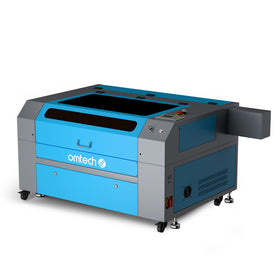
The larger OMTech Pronto 60W CO2 laser cutter is one of the industry mainstays in this category. Its 60W CO2 laser provides the cutting capability needed for more demanding woodworking projects, while its spacious 700×500 mm-inch working area accommodates larger designs and multiple smaller pieces in a single setup.
With both honeycomb and aluminum blade workbeds, it provides flexibility for different cutting applications. Its ability to process materials such as wood, acrylic, leather, and glass also makes it a versatile option for businesses that want to expand beyond wood cutting.
How Much Does a Laser Engraver For Wood Cost? 4 Price Tiers
| Laser Type | Average Price Range | Best For | Notes |
| Entry-Level Diode (5W - 10W) | £200 –£500 | Engraving and cutting thin 3mm (1/8") plywood. | Perfect for testing the hobby. They require multiple passes for cutting and are mostly open-frame, meaning you must buy safety glasses and look into air assist. |
| Prosumer Diode (20W - 40W) | £500 – £1,500 | Faster cutting of 6mm (1/4") plywood. | These step up the cutting speed significantly but warn that they still struggle heavily on thick hardwoods or wood over 1/4 inch. |
| Budget CO2 / "K40" (40W) | £600 – £700 | Cutting 1/4" plywood and acrylic cleanly. | The entry point for enclosed gas lasers. Users highly recommend units updated for LightBurn software compatibility |
| Mid-Range CO2 (50W - 65W) | £1,500 – £3,500 | Small businesses, rapid production, and hardwoods up to 1/2". | This is the "sweet spot" if you want to skip the limitations of diodes. |
Choosing a Laser Cutter For Wood: Commercial vs. Hobby/Personal Use
One of the most important factors that should determine how much your laser cutter for wood costs is whether you are doing wood laser cutting for commercial or hobby use.
- For a wood laser cutter for business, reliability, speed, and standard components are your highest priorities.
- For a wood laser cutter for private or hobby use, you mainly want an affordable machine that fits into your physical space and is safe for home use.

1. Choosing a Wood Laser Cutter for a Small Business: Production-First Priorities
The best laser cutting machines for small businesses are high-Speed CO2 or Fiber Lasers. Look for CO2 lasers with a minimum of 60W to 100W of power. This higher wattage is important because it cuts thicker wood in a single pass at much faster speeds, reducing the charred "burnt edge" finish that requires time-consuming manual sanding.
- Prioritize Ruida controllers and LightBurn compatibility: Ensure the machine uses an open commercial DSP controller (like a Ruida controller). This allows you to use industry-standard software like LightBurn to optimize your cutting paths, manage layers efficiently, and queue jobs seamlessly.
- Large pass-through slots: Look for a machine with front and back pass-through doors. This is an important feature, especially for wood laser cutting: it allows you to buy material in bulk sheet sizes (like 4'x8' plywood sheets), cut them into long strips, and feed them straight through the machine without having to pre-cut every single piece to fit inside a small cabinet.
- Consider support and parts availability: Look for brands with domestic technical support and readily available replacement parts (like mirror kits, focus lenses, and replacement laser tubes) so your business isn't left waiting weeks for a container ship to arrive if a component fails.
2. Choosing a Wood Laser Cutting Machine For Hobby Use
- Go for plug-and-play enclosures or compact diode systems: As a hobbyist, you will likely be working out of a spare room, basement, or garage. A desktop machine with a fully enclosed body, safety-interlocked lid, and built-in smoke evacuation ports is much easier to manage.
- Lower power options (20W to 40W Diode or 40W CO2): If you are only making a handful of items a week, a modern high-power diode laser is perfectly sufficient. They cut thin woods like 1/8" Baltic birch cleanly and can engrave incredibly intricate designs.
- User-friendly software interfaces: Look for machines that pair natively with approachable design tools. LightBurn is still highly recommended.
- Affordable upgrades: Look for ecosystems where you can buy a baseline machine and add components later, like a rotary attachment for engraving cups, an air assist pump to reduce scorch marks, or a higher-wattage laser module when you are ready to tackle thicker woods.

Final Thoughts on Laser Cutters For Wood
In summary, choosing a laser cutter for wood comes down to balancing your budget, production needs, and the type of projects you want to create. While entry-level diode lasers offer an affordable way to get started with engraving and light cutting, CO2 laser machines provide greater cutting capabilities, faster production, and more flexibility for businesses working with thicker wood.
If you are a hobbyist, a compact diode laser or entry-level CO2 machine can be a practical starting point for making personalized gifts, decorative items, and small wooden projects. If you plan to turn laser cutting into a business, however, investing in a more powerful CO2 laser with a larger working area, reliable components, and efficient production capabilities can help you handle more demanding projects.
You may also be interested in this guide on laser cutting and engraving wood.