40W Laser Engravers: How to Choose the Right Machine for Your Needs
The biggest advantage of a 40W laser engraver is that it gives you enough power to handle a broad range of engraving materials and projects without requiring you to invest in a larger, more expensive industrial machine. This is why 40W is generally considered in the laser engraving community as a “sweet spot” for a laser engraving machine.
However, when it comes to laser engraving machines, wattage never tells you the complete story: different models can have the same power output, but are designed to produce very different results. In fact, the very meaning of 40W depends on the type of laser you are talking about: a 40W diode laser, CO2 laser, and fiber laser are completely different machines, even if their advertised power ratings look similar.
So, in this guide, we will explore what each type of 40W laser engraver offers and how to choose the right 40W machine for your workshop or business.
Types of 40W Laser Engravers: Diode vs. CO2 vs. Fiber Lasers
When choosing a 40W laser engraver, there are three main types you will encounter: 40W diode laser engravers, 40W CO2 laser engravers, and 40W Fiber Laser Engravers. Though these are all 40W laser engraving machines, they are fundamentally very different: their capabilities, compatible materials, and price tags vary considerably.
40W Diode Lasers vs 40W CO2 Lasers vs 40W Fiber Lasers
| Feature | 40W Diode | 40W CO2 | 40W Fiber |
| Best suited to | Crafts and general engraving | Nonmetallic cutting and engraving | Metal marking and engraving |
| Wood | Very good for engraving; suitable for thin-material cutting | Very good for engraving and cutting | Generally not the intended application |
| Acrylic | Limited, especially clear acrylic | Very good for compatible acrylic | Generally not the intended application |
| Bare metal | Limited; coatings may be needed | Limited with standard configurations | Very good |
| Glass | Limited and surface-dependent | Well suited to surface engraving | Limited and surface-dependent |
| Typical applications | Crafts, signs, gifts | Acrylic signs, wood products, displays | Metal components, tools, identification plates |
| Typical setup | Often compact; configuration varies | May require cooling and exhaust equipment | Often compact galvo system; enclosure and extraction depend on application |
| Main consideration | Material compatibility and actual optical output | Cutting capacity, cooling, and workspace | Marking field, material compatibility, and engraving depth |
The central distinguishing factor between the three is simple:
- 40W diode lasers are attractive for accessible craft work
- 40W CO2 lasers excel at many nonmetallic cutting and engraving jobs,
- 40W fiber lasers are purpose-built for metal marking.
When choosing, your goal should be to make a decision based on the materials and outcomes you need: do not treat all the 40W machines as equivalent.
1. 40W Diode Laser Engravers: Accessible and Versatile for Makers
A 40W diode laser engraver uses semiconductor laser diodes to produce a focused beam of light. Usually, it is made by combining multiple smaller (5W or 6W) blue laser beams into one powerful focal point using prisms.
What you should know is that many machines in this category are designed for hobbyists, home workshops, and small businesses that primarily work with wood and other suitable nonmetallic materials. What projects are 40W diode lasers good at?
Engraving names, logos, illustrations, and decorative patterns on wood.
- Cutting suitable thin plywood, depending on its composition, thickness, and the machine's tested capabilities.
- Personalizing leather and selected coated or painted items.
- Engraving slate, stone, and other suitable surfaces.
- Marking certain coated metals and anodized aluminum.
- Producing signs, ornaments, personalized gifts, and craft products.
Why Consider a 40w Diode Laser? The Pros
40W diode laser engravers are very easy to use and maintain, and they are also very versatile. They don't require complex water cooling pumps, mirror alignment, or a heavy chassis.
Also, many modern 40W modules allow you to toggle the power down to 20W or lower to shrink the "spot size" for ultra-fine photo engraving.
Challenges You Might Face With a 40W Diode Laser
The biggest limitation of a 40W diode laser, especially when compared with a 40W CO2 laser, is that it is more limited in the materials it can cut or engrave. Because the wavelength is visible blue light, it cannot cut or engrave clear glass or clear/light-colored acrylics. The beam passes straight through them.
Also, before comparing specifications, check what the manufacturer means by 40W. Some machines advertise electrical input power or the combined rating of several components rather than 40W of actual optical output. These figures should not be treated as interchangeable.

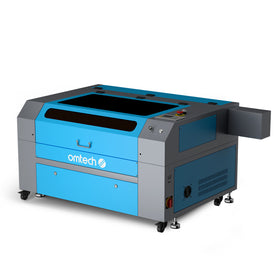
2. 40W CO2 Laser Engravers: Strong for Cutting and Engraving Nonmetals
A CO2 laser engraver uses a gas-based laser source that typically emits light at a wavelength of approximately 10.6 micrometers. This wavelength is well suited to processing many nonmetallic materials, which explains why CO2 machines are popular in sign-making, craft production, fabrication, and product personalization. A suitable 40W CO2 laser can be used for:
- Cutting and engraving suitable wood and plywood.
- Cutting and engraving compatible acrylic sheets.
- Producing signs, displays, decorative panels, and personalized gifts.
- Engraving glass, including surface treatments and decorative designs.
- Processing selected rubber materials designed for laser engraving.
- Making craft components, packaging inserts, and customized nonmetallic products.
A key advantage is acrylic processing. CO2 lasers are generally well suited to cutting clear acrylic, whereas common blue diode lasers are poorly suited to cutting transparent acrylic.
Why Consider a 40W CO2 Laser Engraver? The Pros
The main advantage of a 40W CO2 laser engraver, especially compared to diode and fiber laser engravers in the same power range, is the superior versatility it offers for cutting and engraving different kinds of materials. Its far-infrared wavelength is highly absorbed by organic matter. A 40W CO₂ laser can:
- Vaporize clear acrylic instantly with smooth, polished edges
- Frost glass perfectly without any special paints or tapes.
- Cut through thick wood significantly faster and with less charring than a diode.
The Cons
The major challenge with a CO2 laser engraver is the amount of maintenance and care it requires:
- The glass tubes require a constant water cooling system (like a bucket or dedicated chiller).
- Depending on the model, the mirrors might also require manual alignment.
- The tubes have a shorter total lifespan (usually 2,000–5,000 hours) before needing replacement.
Who should buy a 40W CO2 laser?
Choose a 40W CO2 laser if you regularly cut or engrave wood, acrylic, glass, and other compatible nonmetallic materials. It is particularly relevant to sign makers, personalized-product businesses, craft workshops, and users who need better acrylic-cutting capability than a typical diode laser provides.
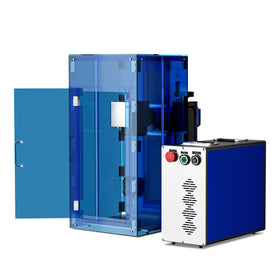
3. 40W Fiber Laser Engravers: Designed for Metal Marking
A fiber laser engraver is built strictly for metal fabrication and jewelry. At 40W, a fiber laser can deeply engrave, etch, and even slice through thin sheets of brass, copper, silver, steel, and titanium at blistering speeds. They require virtually zero maintenance and last up to 100,000 hours.
Fiber systems also use a galvo scanning head, which moves the beam rapidly across a defined marking field. This design can support fast marking of small parts, logos, text, QR codes, and serial numbers.
What projects are 40W fiber lasers good at?
- Marking logos and serial numbers on metal components.
- Engraving stainless steel tools, plates, and compatible accessories.
- Personalizing suitable aluminum products.
- Marking jewelry and selected metal gift items.
- Adding identification codes to industrial parts.
- Producing durable product markings for workshops and manufacturing businesses.
Fiber lasers can process many metals, including stainless steel and various aluminum alloys. Results vary with the alloy, surface finish, coating, and laser parameters.
Some fiber systems can also mark selected plastics, but compatibility depends on the material and formulation. You should not assume that a fiber laser is suitable for every plastic simply because it works well on metals.

Who should buy a 40W fiber laser?
A 40W fiber laser is the strongest candidate if most of your work involves bare metal rather than wood, acrylic, or other nonmetals.
- It can suit machine shops, metal-product manufacturers, jewelry businesses, tool suppliers, and companies that need permanent product identification.
- It is less suitable as an all-purpose craft machine if you want to cut plywood, produce acrylic signs, or engrave large decorative wooden panels.
A fiber laser is designed for a different set of jobs, and its smaller marking field may also be limiting for oversized projects.
How to Choose Between 40W Diode, CO2, and Fiber Laser Engravers
Choosing the right 40W laser engraver starts with your projects, not the machine's specifications. Before comparing individual models, identify the materials you need to process, the results you expect, and how you plan to use the machine.
1. The materials you intend to engrave or cut
This is the most important consideration because different laser wavelengths interact with materials differently.
- If you primarily work with wood, leather, and craft materials, a 40W diode laser may be sufficient.
- If you need to cut acrylic, engrave glass, or process a broader range of nonmetallic materials, a 40W CO2 laser is generally the better choice.
- If your primary material is bare metal, a 40W fiber laser is the most appropriate option.
Make a list of your five most common materials before shopping. Then check each machine's documented compatibility with those materials.
2. Whether you need to engrave, cut, or do both
Engraving and cutting place different demands on a laser, and while 40W is generally sufficient for engraving, it may not suffice for laser cutting
- A 40W diode laser may be sufficient for detailed wood engraving and selected thin-material cutting projects.
- A 40W CO2 laser is better suited to cutting compatible nonmetallic materials, including acrylic.
- A 40W fiber laser is designed primarily for metal marking and engraving rather than cutting sheet wood or acrylic.
If you intend to do both cutting and engraving, consider which operation will account for most of your workload. That will help you prioritize the right technology.
3. Your production volume and required speed
Think about how many products you need to complete in a typical working day. A machine that works well for five personalized gifts may become a bottleneck when you need to produce 100 items.
Your actual production rate depends on the design, material, settings, machine configuration, and time needed to load and unload each item. For fiber lasers, for example, fast surface marking does not necessarily mean equally fast deep engraving.
If your business is growing, consider whether a higher-powered machine would provide a better long-term investment than a 40W model.
4. Your available workspace and budget
The purchase price is only one part of the cost of owning a laser engraver. Depending on the technology and configuration, you may also need an enclosure, ventilation or fume extraction, cooling equipment, air assistance, rotary attachments, and software.
A compact diode or fiber system may suit a small workshop, although the required safety controls still depend on the machine. A CO2 system may need more space for the machine and its supporting equipment.
Before buying, calculate the total setup cost and confirm that you can install and operate the machine safely.
5. Your future business plans
Consider whether you intend to remain focused on one product category or expand into other materials.
- A diode laser may be an economical way to start a personalized wooden-gift business.
- A CO2 laser can provide a better foundation for a business selling acrylic signs, displays, and wooden products.
- A fiber laser makes more sense for a business specializing in metal accessories, tools, components, or identification plates.
Do not pay for capabilities you are unlikely to use. Equally, avoid choosing a machine solely because it is inexpensive if its limitations will prevent you from fulfilling your expected orders.
Decision-Making Matrix: Which 40W Laser Is Right for You?
| Your main requirement | Best technology to consider | Why |
| Engraving wood, ornaments, and craft products | 40W diode | Well suited to many common creative projects |
| Cutting thin wood and engraving designs | 40W diode | Can handle suitable thin materials, depending on the machine |
| Cutting and engraving acrylic signs | 40W CO2 | Better suited to processing compatible acrylic, including clear acrylic |
| Producing wooden signs and decorative panels | 40W CO2 or diode | Choose CO2 for broader cutting needs and diode for compatible craft-focused work |
| Engraving bare stainless steel and metal tools | 40W fiber | Designed for direct metal marking and engraving |
| Marking serial numbers, logos, and QR codes on metal | 40W fiber | Well suited to repeatable, detailed metal marking |
| Engraving glass and nonmetallic decorative products | 40W CO2 | Generally well suited to glass surface engraving and many nonmetallic materials |
| Starting a personalized-gift business | Diode or CO2 | Choose according to whether your product range is primarily craft-focused or includes substantial acrylic work |
| Running a metal-personalization business | Fiber | Matches the requirements of metal-focused production |
| Cutting thicker materials or fulfilling large orders | Compare higher-powered models | A 40W machine may limit production speed or cutting capacity |
The simplest rule: Choose a diode laser for compatible craft materials, a CO2 laser for nonmetallic cutting and engraving, and a fiber laser for metal marking. Then compare the working area, accessories, total cost, and expected output before committing to a specific model.

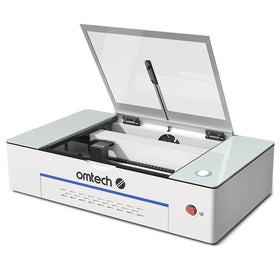
Recommended Product: OMTech 40W CO₂ Laser Engraver
If you are a beginner or run your own small business looking for an affordable way to get started with 40 CO₂ laser engraving, the OMTech K40+ 45W Desktop CO2 Laser Engraver should be at the top of your list.
Its compact design and 12 × 8-inch working area make it suitable for smaller projects, including personalized gifts, wooden decorations, acrylic signs, and other custom products. It can engrave a range of compatible nonmetallic materials and cut suitable thin materials, giving users a practical way to explore different applications without immediately investing in a larger machine.
The machine also supports LightBurn software, which can help users prepare designs and manage engraving jobs.
Why Choose a 40W Laser Engraver? What Makes 40W the Ideal Power Output For a Laser Engraver?
The main reason why 40W laser engravers are so popular is that they offer a practical balance between power, performance, and cost. Here are the top three reasons to choose a 40W laser engraver:
1. It offers room to grow beyond basic engraving.
A decent 40W machine can handle more demanding projects than many low-powered entry-level alternatives. Depending on whether it is a diode, CO2, or fiber laser, you may be able to engrave wood, cut certain sheet materials, mark coated metals, or produce detailed designs on selected plastics.
For example, a 40W diode laser can be suitable for cutting relatively thin wood, while a 40W CO2 laser is generally better suited to cutting and engraving nonmetallic materials. A 40W fiber laser, meanwhile, is designed primarily for marking and engraving metals.
3. It can be more economical than buying a larger machine.
Higher-powered laser engravers are great, but they are also usually very expensive. If you are working with small products, limited material thicknesses, or relatively low order volumes, a 40W laser engraver is an affordable option that allows you to start without investing too heavily into a business you are not sure to be able to scale eventually. It is a lower-risk approach to starting a laser engraving business.
4. It can support small-business production.
If you sell personalized gifts, signs, promotional products, engraved accessories, or custom components, a 40W laser engraver may provide a practical starting point. It can help you move beyond occasional hobby projects into repeatable production without immediately investing in a large industrial system.
5. 40W Laser Engravers are also great Laser Engraving Machines For Beginners
If you are a first-time buyer, a 40W laser engraving machine, specifically a 40W CO2 laser engraving machine, is perfect because it has the capacity and versatility to provide you access to a meaningful range of applications. You can learn about material preparation, focus, speed and power settings, file preparation, and repeatable production workflows.
However, keep in mind that the meaning of 40W varies by laser technology. A 40W optical-output diode laser is not directly equivalent to a 40W CO2 laser or a 40W fiber laser. Each uses a different wavelength and interacts with materials differently. This means you should compare machines based on their actual capabilities rather than wattage alone.

Who Should Consider a 40W Laser Engraver?
A 40W laser engraver may be a good fit for:
- Hobbyists and makers: People who want to create customized gifts, signs, ornaments, models, and decorative pieces.
- Small-business owners: Entrepreneurs producing personalized products, craft items, promotional merchandise, or small batches of custom goods.
- Workshops and product designers: Users who need to prototype parts, engrave product details, or create repeatable designs.
- Metalworking and personalization businesses: Buyers who need a dedicated machine for marking serial numbers, logos, text, or designs on compatible metal products.
- Growing businesses: Operators who need more capability than a basic starter machine but do not yet require a large production system.
A 40W machine is not automatically the best option for every buyer. If you regularly cut thick materials, process large batches, or need high-throughput industrial production, a more powerful or larger machine may be a better investment. Likewise, if your projects involve several unrelated material types, you may need to prioritize versatility rather than wattage.
Final Thoughts on 40W Laser Engravers
A 40W laser engraver can be a worthwhile investment when its capabilities match your materials, projects, and production needs. It can provide a practical starting point for a hobbyist, a personalized-product business, or a workshop that wants to add laser engraving without immediately moving into large industrial equipment.
However, wattage alone does not determine whether a machine is right for you. The laser source, material compatibility, cutting capacity, working area, software, and supporting equipment all influence the results you can achieve.
If you mainly work with wood and craft materials, start by comparing diode lasers. If you need to cut acrylic and process a wider range of nonmetallic materials, prioritize CO2 lasers. If you want to engrave bare metal, a fiber laser is the more appropriate choice.
Finally, buy for the work you actually intend to do, while leaving enough room for realistic business growth. A well-matched machine will be more useful than a higher-powered model that does not suit your materials, or a cheaper machine that cannot deliver the results your customers expect.
You may also be interested in our complete guide on how many watts laser engraver you need in the UK.