Reflecting on EDUtech Australia 2026: Meaningful Conversations, Valuable Insights
From 3–4 June 2026, the OMTech team was proud to exhibit at EDUtech Australia 2026, one of the country's leading events for education, technology, and innovation.
Over three busy days, we had the opportunity to meet teachers, Design & Technology (D&T) specialists, STEM coordinators, school leaders, makerspace managers, and education partners from across the United Kingdom and Europe.

More importantly, we had meaningful conversations.
It was inspiring to hear how schools, colleges, and training centres are using digital fabrication technologies to support STEM education, design thinking, engineering projects, entrepreneurship programmes, and hands-on learning. We also enjoyed connecting with existing customers, prospective users, and fellow industry professionals who share a common goal: preparing students with practical skills for the future.
While every institution has unique requirements, several common themes emerged throughout the event.

1. Value for Money Is a Top Priority
The most frequent discussion centred around budgets.
For educators, value wasn't simply about finding the lowest price. Instead, they were evaluating:
- Machine capability
- Safety features
- Training and support
- Reliability
- Long-term operating costs
- Return on investment for their department
Many visitors were surprised by how much capability modern laser systems can offer without the cost traditionally associated with industrial-grade equipment.
2. Safety Remains Essential in Education
Safety was one of the most common concerns raised by schools.
Teachers and school leaders wanted reassurance that laser technology could be safely integrated into classrooms, workshops, and makerspaces.
Questions frequently focused on:
- Class 1 laser safety
- Student supervision
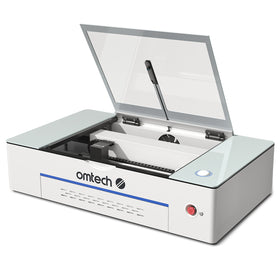
- Enclosed systems
- Safety interlocks
- School compliance requirements
- Risk assessment considerations
For education customers, safety is never an optional extra. It is often one of the most important factors influencing purchasing decisions.

3. Training and Installation Support Matter
Many schools are excited about introducing laser technology, but may have limited prior experience with fabrication equipment.
As a result, visitors frequently asked:
- Who installs the machine?
- Is teacher training available?
- How easy is the software to learn?
- What support is available after purchase?
These conversations highlighted an important reality: schools are not just purchasing hardware. They are investing in a learning platform that teachers need to feel confident using from day one.
4. Extraction and Filtration Are Key Considerations
Indoor operation was another major topic.
Most educational institutions plan to install laser systems in classrooms, D&T workshops, STEM labs, or makerspaces, making air quality and extraction critical considerations.
Educators wanted to understand:
- What extraction options are available?
- Can the machine operate indoors?
- How are fumes and particulates managed?
- What materials can be safely processed?
For many schools, effective filtration solutions are essential to successful implementation.
5. Working Area Size Influences Classroom Productivity
Another common discussion focused on bed size.
Teachers were often thinking about entire classes rather than individual projects. Whether producing model components, architectural prototypes, signage, or engineering projects, machine capacity directly impacts classroom efficiency.
Common questions included:
- How many student projects can be processed at once?
- Which machine size is most suitable for schools?
- Is a larger work area worth the investment?
These discussions reinforced that educational customers are looking for practical productivity as much as technical specifications.
6. Rotary Attachments Sparked Interest
A number of educators asked about rotary attachments and advanced applications.
Examples included engraving:
- Water bottles
- Travel mugs
- Pens
- Cylindrical projects
- Promotional products
These questions demonstrated a growing interest in expanding beyond basic laser-cut projects and exploring real-world manufacturing and product design applications within the classroom.
7. UV Printing Is Generating Growing Interest
One of the most interesting trends was the level of interest in UV printing technology.
Many visitors wanted to understand how UV printing could complement laser cutting and engraving in educational environments.
Potential applications discussed included:
- Full-colour signage
- Product prototypes
- Awards and recognition projects
- Entrepreneurship programmes
- Personalised merchandise
- Makerspace projects
Educators quickly recognised how combining laser fabrication with UV printing could significantly expand the creative possibilities available to students.
Looking Ahead
Educators are not investing in technology simply because it is innovative. They are investing because they want students to design, build, prototype, problem-solve, and develop real-world skills.
We would like to thank everyone who visited the OMTech stand, shared their experiences, and discussed their goals for STEM and Design & Technology education.
The conversations we had throughout the event provided valuable insights into how schools are adopting fabrication technologies and where OMTech can continue to support educators across the UK.
We look forward to continuing these conversations and helping more schools, colleges, and makerspaces bring hands-on learning to the next generation of designers, engineers, makers, and innovators.