Is Laser Engraving Still Profitable in 2026?
The general feeling among laser engraving entrepreneurs is that it's still profitable in 2026, but mainly as a side hustle rather than a standalone full-time venture. Most makers note that competition is intense, and success now depends far more on how sharp your niche is and how well you market it than on the laser engraving machine you own.
So, is laser engraving still profitable? It used to be closer to a "get-rich-quick" business, back when laser engraving machines were expensive, and competition was lighter. But the biggest shift in recent years has been the arrival of cheaper, more capable machines: desktop lasers have dropped to under $2,000, the entry barrier is essentially gone, and platforms like Etsy are heavily saturated with generic items as a result.

Where Laser Engraving Is Profitable: Where Makers Are Actually Making Money
To turn a consistent profit, experienced users emphasize moving from "laser hobbyist" to business owner using a few specific strategies:
- B2B and repeat bulk orders. The real money is in business-to-business accounts. Engraving 100 corporate tumblers, local school plaques, industrial asset tags, or real estate closing gifts uses one design setup spread across a large, highly profitable batch.
- Using the laser as "just a tool." The most successful creators treat the laser as a single step in a larger process. Instead of selling flat engraved wood, they build custom furniture or high-end PC cases, or create intricate artwork, and use the laser to add a premium logo or accent.
- Hyper-local markets. Craft fairs, music festivals, and partnerships with local shops bypass online algorithm competition entirely. One popular real-world example: setting up a fast fiber laser at the finish line of a local marathon to engrave names onto finisher medals for $10 a pop, generating strong hourly returns with almost no marketing spend.
Making Money With Laser Engraving: Equipment Realities
Experienced entrepreneurs strongly advise against buying cheap, slow "toy" diode lasers if you want to run a business; they simply take too long to complete a single job. To maintain a profitable hourly rate ($25–$50+ per hour), you typically need a CO2 laser engraver (for wood, acrylic, and glass) or a Fiber/UV laser (for metals and plastics) that can work rapidly.
Galvo fiber lasers and enclosed CO2 lasers are generally considered the most profitable laser engravers for a business, while entry-level diode lasers are widely viewed as an operational profit trap.
What Are The Most Profitable Laser Engravers For Business?
1. Galvo Fiber Lasers (MOPA or Q-Switched), Best for high-speed B2B production.
Galvo systems use mirror galvanometers rather than heavy moving gantries, hitting speeds up to 10,000 mm/s. Entrepreneurs favor these for high-margin bulk batches like custom challenge coins, stainless steel tumblers, and industrial asset tags.
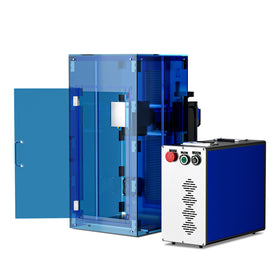
OMTech's Galvo Fiber Laser lineup is a common starting point for makers moving into this category, since it's built specifically for fast, repeatable metal marking at volume.
2. Enclosed CO2 Lasers (40W to 100W+): Best for consumer product versatility.
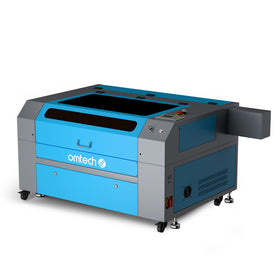
This is the ultimate "all-rounder" for scaling a business. It easily cuts and engraves wood, acrylic, slate, and leather, and locks down healthy margins for custom wedding signage, layered acrylic artwork, and corporate holiday gifts.
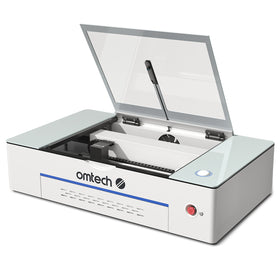
OMTech's enclosed desktop CO2 lasers (like the Polar series) are amongst the most highly recommended in this category for exactly this kind of do-everything versatility.
3. Galvo UV Lasers: Best for premium, high-end micro-niches.
UV lasers use a "cold" marking beam that interacts with delicate materials without creating thermal stress. Sellers use these to command premium markups on specialty glass, electronics, ceramics, and delicate plastics. OMTech also offers fiber Galvo systems for makers looking to move into this higher-end niche once they've outgrown standard fiber or CO2 work.
Why Are Cheap Diode Lasers Deemed "Profit Traps" In 2026?
Entrepreneurs strongly warn against trying to run a high-volume business on entry-level, open-frame diode lasers (under $1,000). Here’s why: while they're highly capable tools for learning design software or crafting small personal projects, they tend to fail commercially for two reasons:
- The speed penalty. A job that takes a professional CO2 or fiber laser 60 seconds can take an open-frame diode up to 30 minutes. When you calculate your return based on an hourly shop rate, diodes can push your effective margins below minimum wage.
- Unbilled overhead. They require tedious masking tape application to prevent soot stains on wood and lack structural enclosures, adding hidden costs for custom ventilation and smoke hood tents.

What Are the Most Profitable Laser Engraving Products?
Experienced engravers stress that your specific product and material choices completely dictate your profit margins, machine costs, and safety setup. Makers in laser engraving communities online consistently break down why certain choices make or break the business.
1. The Physics Realities: Different Materials Require Completely Different Lasers
You can't buy one cheap laser and expect it to engrave everything; the physics of light wavelength dictates what your machine can physically interact with:
- Metal tumblers. To engrave a powder-coated tumbler, a standard CO2 or strong diode laser can strip away the paint layer to expose the metal underneath. But if you want to engrave bare metals like stainless steel or brass, you strictly need a fiber laser. A machine that works well on wood will fail on raw metals.
- Wood signs. Wood engraves and cuts easily with a CO2 or diode laser. That said, different woods have wildly variable profit profiles; cheap plywood requires tedious masking to prevent burn marks, adding unbilled labor time, whereas solid hardwoods look premium and can be upcharged accordingly.
- Leather patches. Real leather engraves beautifully with a CO2 laser, but fake leather (specifically leatherette containing PVC) releases toxic hydrochloric acid gas when burned. This gas will rapidly corrode your machine's internal parts and can severely damage your lungs if your workshop isn't heavily ventilated.
2. The Time-to-Profit Math
"Time is your most expensive material." Different shapes and physical items carry very different operational constraints:
- The rotary trap. Personalizing a flat wood sign takes seconds. Personalizing a metal tumbler requires a specialized rotary attachment that physically spins the cup. Setting up a rotary axis, aligning the cup, and running the curved image file takes significantly longer per unit; if you don't factor that setup time into your pricing, you can end up making below minimum wage.
- Raw materials vs. assembled blanks. Makers often debate buying raw wood sheets versus pre-assembled blanks (like pre-cut cutting boards or pre-made adhesive leather patches). Pre-made blanks cost more upfront but save hours of laser cutting time, letting you fulfill high-margin bulk orders instantly.
3. Shipping and Weight Logistics
If you plan to sell online, material choice completely shifts your shipping viability.
- Heavy items (wood signs, cutting boards). Thick wood looks high-end but is incredibly heavy. High shipping costs can scare away customers or eat your entire profit margin on Etsy if you offer "free shipping."
- Lightweight items (leather patches, keychains). These items cost pennies to mail in a simple bubble-wrap envelope. A bulk batch of 100 leather patches for a local corporate client fits into a tiny box, keeping shipping overhead practically at zero.
Most Profitable Laser Engravers and Materials
| Material / Item | Required Laser Type | Profit Margin Verdict | Major Catch to Keep in Mind |
| Metal Tumblers | Diode/CO2 (for coated) or Fiber (for raw) | High (for bulk local events / B2B) | Requires an extra investment in a rotary roller attachment. |
| Wood Signs | CO2 or Diode | Low to Medium (highly saturated online) | Plywood burns easily, requiring masking tape and cleanup labor. Heavy to ship. |
| Leather Patches | CO2 or specialized Galvo | Very High (low material cost, high markup) | Real leather smells strongly when burned; fake leather (PVC) is toxic and can damage your machine. |
Starting a Profitable Laser Engraving Business: Local Side Hustle vs. Online Store
The business model you choose, local or online, and your starting budget are the two most critical factors, because together they dictate what machine you need and how you'll spend your time. If these two choices don't align, you risk buying a machine that can't physically make the products you want to sell, or running out of money before making a single sale.

1. Local Side Hustle vs. Online Store
This choice dictates your marketing strategy, your competition, and your shipping logistics.
- Local side hustle. You sell to local businesses, craft fairs, real estate agents, or schools. Your competition is low, and you can charge premium prices because people like buying locally. However, your total audience size is physically limited by your geography.
- Online store (Etsy/Shopify). You sell to the entire country or world, with an effectively infinite audience, but you're competing globally, and you must factor in shipping costs, packaging time, and ad spend. If you sell heavy items (like thick wooden cutting boards), shipping fees can eat into your profit margins fast.
2. Your Equipment Budget
Your budget determines your production speed and the materials you can cut or engrave. A $500 machine and a $5,000 machine are completely different tools: a cheap machine might take 45 minutes to engrave one tumbler, while a professional machine will do it in 2 minutes. If you try to run a high-volume online store with a slow, cheap machine, you'll never be able to keep up with orders.
How to Decide: The Step-by-Step Process
Step 1: Identify Your Target Customer
Don't start by looking at machines: start by looking at who will actually buy from you.
- Choose local if you enjoy networking, talking to people, attending weekend markets, or pitching to local business owners.
- Choose online if you prefer digital marketing, SEO, packing boxes at home, and want to run a business entirely behind a screen.
Step 2: Choose Your Target Material
What do you actually want to make? The material dictates the technology you need.
- Wood, acrylic, leather, glass: you need a diode or CO2 laser.
- Bare metals (steel, aluminum, brass) and hard plastics: you need a fiber or UV laser.
Step 3: Match Your Budget to Your Strategy
| Budget | Machine Type | Best Business Model | What You Can Expect |
| Under $1,000 | Entry-Level Diode | Local Only (Low Volume) | Very slow. Good for learning the software and making small custom gifts for friends or local markets. Cannot engrave bare metal. |
| $1,500 – $3,500 | Enclosed CO2 or High-End Diode | Local or Niche Online | Much faster. Can cut thick acrylic and wood quickly. Great for a serious local side hustle or a specialized online store. |
| $4,000+ | Industrial CO2 or Galvo Fiber | High-Volume Online or B2B | Lightning-fast. Designed to run all day. Necessary if you want to fulfill dozens of online orders daily or take on bulk corporate metal tumbler orders. |
What Makes Laser Engraving Unprofitable in 2026?
- Design time. Spending 20 minutes designing a custom file for a single $10 item can completely erase your profit margin.
- The "Etsy trap." Trying to sell generic items (plywood Christmas ornaments, basic cutting boards) pits you against thousands of hobbyists willing to work for pennies.
- Copycats. If you design something unique and it starts selling well online, overseas competitors or other hobbyists will often copy your vector files within days.

Final Thoughts on Laser Engraving Profitability in 2026
Laser engraving hasn't stopped being profitable in 2026; it's just stopped being an easy business. The machines got cheaper, so the barrier to entry disappeared, and the market got crowded with generic, low-effort products as a result.
The makers who are actually making money have moved away from selling one-off flat engravings online and toward B2B bulk orders, hyper-local sales channels, or using the laser as one step in a bigger, harder-to-copy product.
Matching your machine to your material and your business model to your personality: local versus online matters just as much as the equipment itself. Get that alignment right, and there's still real money in this business; get it wrong, and even a great machine won't save your margins.
If you're weighing your first serious machine purchase, an OMTech Galvo Fiber laser is worth a look for metal-heavy B2B work, while an enclosed CO2 machine like a 60W-150W model from OMTech's Pronto CO2 Lasers covers the wood, acrylic, and leather side of the business in one versatile setup.